

Fake cryptocurrency websites can look surprisingly convincing. A fraudulent site may copy the colors, layout, logo, login screen, and general appearance of a legitimate exchange. Because the website looks familiar, users may enter their username, password, recovery information, or other sensitive details without realizing that the page is fraudulent.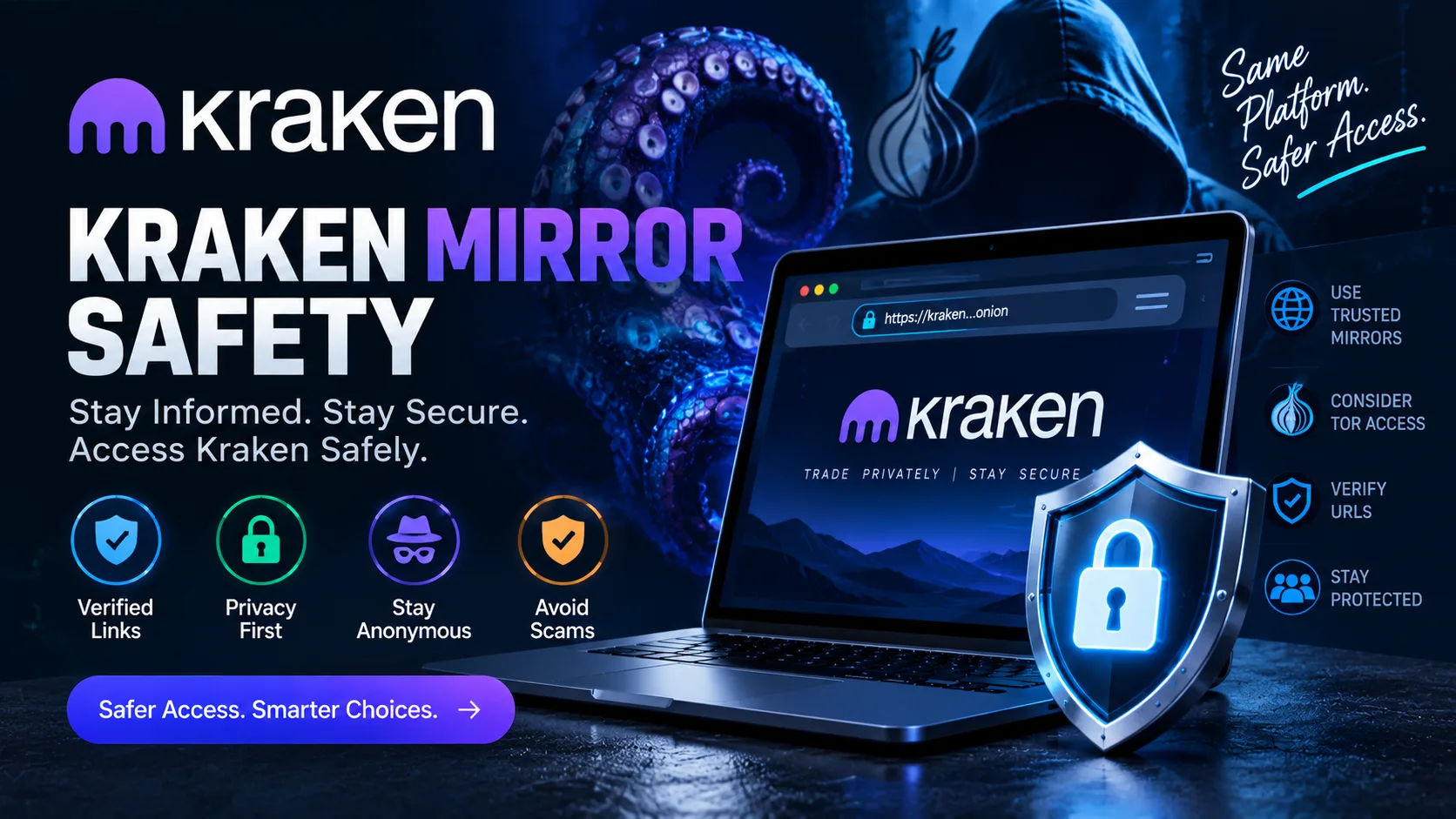
A Kraken clone safety сайт клон Kraken concern is especially important when a website copies the identity or appearance of a legitimate cryptocurrency platform. The purpose of reporting such a website is not only to protect yourself. A timely report can also help security teams, hosting providers, browsers, domain registrars, and other organizations investigate the website and potentially limit its ability to harm additional users.
If you discover a suspected clone site, do not interact with it further than necessary to collect safe evidence. Do not enter passwords, upload identification documents, connect a cryptocurrency wallet, or send funds. Instead, document what you observed and report it through appropriate channels.
What Is a Kraken Clone Site?
A clone site is a fraudulent website designed to imitate a legitimate website. It may use a similar domain name, copied branding, familiar page layouts, or misleading advertisements.
The website may attempt to convince visitors that they are using the genuine service. Some fraudulent pages focus on login credentials, while others may attempt to collect cryptocurrency deposits or personal information.
A copied appearance does not prove that a website is legitimate. Attackers can reproduce visual elements relatively easily.
The domain name and the way the website was reached are therefore important clues. A link received through an unsolicited message, advertisement, social-media post, or suspicious email deserves additional caution.
Why Clone Sites Are Dangerous
The main danger is deception.
A user might believe they are signing into a legitimate cryptocurrency exchange. Instead, the information could be sent directly to criminals.
A fraudulent website could also attempt to persuade users to install software, reveal authentication codes, transfer cryptocurrency, or provide identity documents.
Even if a person notices the fraud before entering information, reporting the website can help protect other people who may encounter the same link.
Signs That a Website May Be a Clone
There is no single sign that proves a website is fraudulent. Several warning signs together can provide a stronger indication.
Suspicious Domain Names
Look carefully at the complete domain name.
Fraudulent websites sometimes use misspellings, extra words, unusual combinations of characters, or domains that are designed to resemble a legitimate brand.
Do not rely only on the logo or page design. A convincing logo can be copied.
Unexpected Login Requests
Be cautious if a website suddenly asks you to log in after you clicked an unsolicited link.
This is particularly important when the message claims that your account has a security problem and demands immediate action.
Legitimate security processes should still be verified through official channels rather than through a suspicious link.
Unusual Payment Instructions
A suspected clone site may request cryptocurrency payments or ask users to transfer assets to unfamiliar addresses.
Do not send money simply because a website displays a professional-looking payment page.
Once cryptocurrency has been transferred, recovering it may be difficult or impossible.
Pressure and Urgency
Scammers often create urgency.
Messages may claim that an account will be closed, a withdrawal will be blocked, or a security problem must be fixed immediately.
This pressure is designed to reduce the amount of time a person spends checking the information.
Taking a few minutes to verify the website independently can prevent serious mistakes.
What Should You Do Before Reporting?
Before submitting a report, protect yourself first.
If you have not interacted with the suspicious website, close the page and avoid returning to it unnecessarily.
If you entered credentials, treat those credentials as potentially exposed. Change the affected password through the genuine service using an independently verified official website or application.
If the same password was used elsewhere, change it on those services as well.
Where available, enable strong multi-factor authentication and review account activity for anything unusual.
Do Not Contact the Suspicious Operator
You generally do not need to confront the people behind a suspected clone website.
Sending messages to the operator could expose you to additional scams or social-engineering attempts.
It is safer to report the suspected website through established security, abuse, or law-enforcement channels.
Collect Safe Evidence
Useful evidence can make a report easier to investigate.
Record the exact website address, including the complete domain name.
Take screenshots of the suspicious page if doing so does not require entering additional information.
Keep the original email, message, or advertisement that directed you to the website.
If you received the link through email, preserve the message rather than deleting it immediately.
You can also record the date and approximate time when you encountered the website.
Avoid Collecting Sensitive Information
Do not intentionally enter fake or real passwords merely to test the website.
Do not connect a cryptocurrency wallet just to see what happens.
Do not upload identification documents.
The purpose of evidence collection is to document the suspicious activity, not to investigate the criminals yourself.
Report the Website to the Legitimate Company
If you believe a website is impersonating Kraken, use the legitimate company's official security or support reporting channels.
Access the genuine website independently rather than clicking a reporting link contained in the suspicious message.
Look for the company's official support or security information and follow its current reporting procedure.
When reporting, provide the suspicious domain, screenshots, the message that led you there, and any other relevant details.
Do not include your password or other unnecessary sensitive information in the report.
Report the Domain to Its Registrar or Hosting Provider
A domain registrar or hosting provider may have an abuse-reporting process.
The registrar is the organization through which a domain name is registered, while a hosting provider supplies infrastructure that may serve the website.
If you can determine the relevant provider safely, submit an abuse report through its official reporting page.
Include the exact domain and explain why you believe it is impersonating a legitimate cryptocurrency service.
What to Include in an Abuse Report
A useful report can contain:
-
The complete suspicious URL
-
The date and time you discovered it
-
The legitimate brand being impersonated
-
Screenshots of the relevant pages
-
The message or advertisement that directed you there
-
A brief explanation of the suspected fraud
-
Any transaction information if money was actually lost
Keep the description factual and concise.
For example, explain that the website appears to imitate a legitimate cryptocurrency exchange and requests account information. Avoid making claims that you cannot support.
Report the Link to Your Browser or Security Provider
Modern browsers and security services often maintain databases of websites associated with phishing and malware.
If your browser provides a mechanism for reporting a dangerous website, use that mechanism.
Security software may also provide reporting tools.
These reports can contribute to broader efforts to warn users before they visit a malicious website.
This is particularly useful when a fraudulent domain is still active and could be appearing in search results, advertisements, or messages.
Report Cryptocurrency Fraud to the Appropriate Authorities
If you lost cryptocurrency, provided sensitive financial information, or became the victim of fraud, consider reporting the incident to the appropriate law-enforcement or cybercrime authority in your country.
The correct reporting organization depends on where you live and the nature of the incident.
When making a report, provide evidence rather than assumptions.
Include transaction hashes, wallet addresses involved in the transaction, dates, amounts, screenshots, emails, and website addresses when available.
Never send additional cryptocurrency to someone who claims they can recover your lost funds.
What If You Entered Your Password?
If you entered your password into a suspected clone site, act quickly.
Use a trusted device if possible and independently navigate to the genuine service.
Change the exposed password immediately.
If you reused that password on other websites, change those passwords too.
Do not use a suspicious link from the original message to perform the password change.
Review account sessions, login history, and security settings for unusual activity.
If you see something suspicious, follow the legitimate service's official account-security process.
Protect Your Email Account
Your email account is especially important because password-reset messages may be sent there.
If the same password was used for your email account, change it immediately.
Enable multi-factor authentication where available.
Review recovery addresses, phone numbers, active sessions, and forwarding settings.
These steps can reduce the risk of an attacker maintaining access.
What If You Entered an Authentication Code?
An authentication code should be treated as sensitive.
If you provided a one-time code to a fraudulent website, contact the genuine service through its official support channel.
Explain exactly what happened and when it happened.
Avoid repeatedly attempting logins through the suspicious website.
Security teams may be able to recommend additional account-protection measures based on the situation.
What If You Sent Cryptocurrency?
If cryptocurrency was transferred to an address controlled by a scammer, document the transaction immediately.
Record the transaction ID or transaction hash, the receiving address, the amount, the cryptocurrency involved, and the approximate time.
Do not delete messages that contain the payment instructions.
Contact the legitimate exchange or wallet provider through its official support channel.
You may also report the incident to the appropriate cybercrime or law-enforcement authority.
Be realistic about recovery claims. Cryptocurrency transactions can be difficult to reverse, and anyone promising guaranteed recovery in exchange for an upfront payment should be treated with caution.
How to Write a Useful Report
A strong report answers a few basic questions.
What website did you encounter?
Why do you believe it is fraudulent?
How did you find the website?
What information did it request?
Did you provide any information or send money?
When did the incident occur?
What evidence do you have?
A clear report helps investigators understand the situation without having to interpret unnecessary details.
Example of a Factual Description
You could describe the situation in simple terms:
“The website appears to imitate a cryptocurrency exchange. It uses similar branding and presents a login page requesting account credentials. I encountered the link through an unsolicited message. I did not enter my password or provide financial information. Screenshots and the complete URL are attached.”
This type of description focuses on observable facts.
How Users Can Avoid Clone Sites in the Future
Reporting is important, but prevention is equally valuable.
Instead of clicking cryptocurrency-related links in unexpected messages, open the official application or manually navigate to the verified website.
Use bookmarks for services you visit regularly.
Check the domain carefully before entering account credentials.
Do not trust a website simply because it has a professional design or uses HTTPS.
HTTPS protects the connection between a browser and a website, but it does not prove that the website itself is trustworthy.
Be Careful With Search Advertisements
Fraudulent websites can sometimes appear through advertisements or misleading search results.
Before signing in, check the domain independently.
If you are uncertain, leave the page and access the service through a previously trusted bookmark or official application.
Keep Security Software Updated
Keep your operating system, browser, and security software updated.
Security tools can help identify known malicious websites and suspicious downloads.
However, technology should not replace careful verification.
Users should still check the website address and avoid unexpected login requests.
Why Reporting Matters
One person reporting a suspicious website may help prevent additional victims.
Security companies can use reports to improve detection.
Hosting providers and registrars may investigate abuse complaints.
Browsers can potentially add dangerous domains to warning systems.
Legitimate companies can investigate impersonation attempts involving their brand.
Authorities may also use reports as part of larger investigations into fraud networks.
This means reporting is useful even when you personally did not lose money.
Common Mistakes to Avoid
One common mistake is continuing to interact with the suspicious website after realizing something is wrong.
Another is deleting all evidence immediately.
Some people also post the suspicious link publicly without warning others about the risks. Sharing malicious links can unintentionally increase exposure.
Another mistake is trusting people who contact victims and promise guaranteed cryptocurrency recovery.
Never provide additional funds or sensitive information simply because someone claims to be a recovery specialist.
Conclusion
A suspected Kraken clone site should be treated as a potential security threat until its legitimacy has been independently verified. Users should avoid entering passwords, authentication codes, personal information, wallet details, or cryptocurrency into a suspicious website.
The safest approach is to document the website without unnecessarily interacting with it, preserve relevant messages and screenshots, and report the domain through appropriate channels. These may include the legitimate company, domain registrar, hosting provider, browser or security service, and relevant cybercrime authorities.
If credentials were entered, change them through the genuine service and protect any other accounts where the same password was used. If cryptocurrency was transferred, preserve the transaction information and report it promptly through legitimate channels.
A Kraken clone safety сайт клон Kraken issue should not be handled by confronting the suspected scammers. The more useful response is careful documentation, account protection, and responsible reporting.
Users should also remember that professional design does not prove authenticity. A convincing logo, familiar colors, HTTPS, or a polished login page can all be copied. Checking the complete domain and independently accessing the legitimate service are much safer habits.
Reporting suspicious websites helps create a safer online environment for other users. Even when no money has been lost, a timely and accurate report can provide useful information to organizations responsible for investigating phishing, impersonation, and online fraud.

Recent Comments